
Switching Phones or Plans? How eSIM Makes Changes Easier
Christian HahnkeTech Enthusiast
Published:
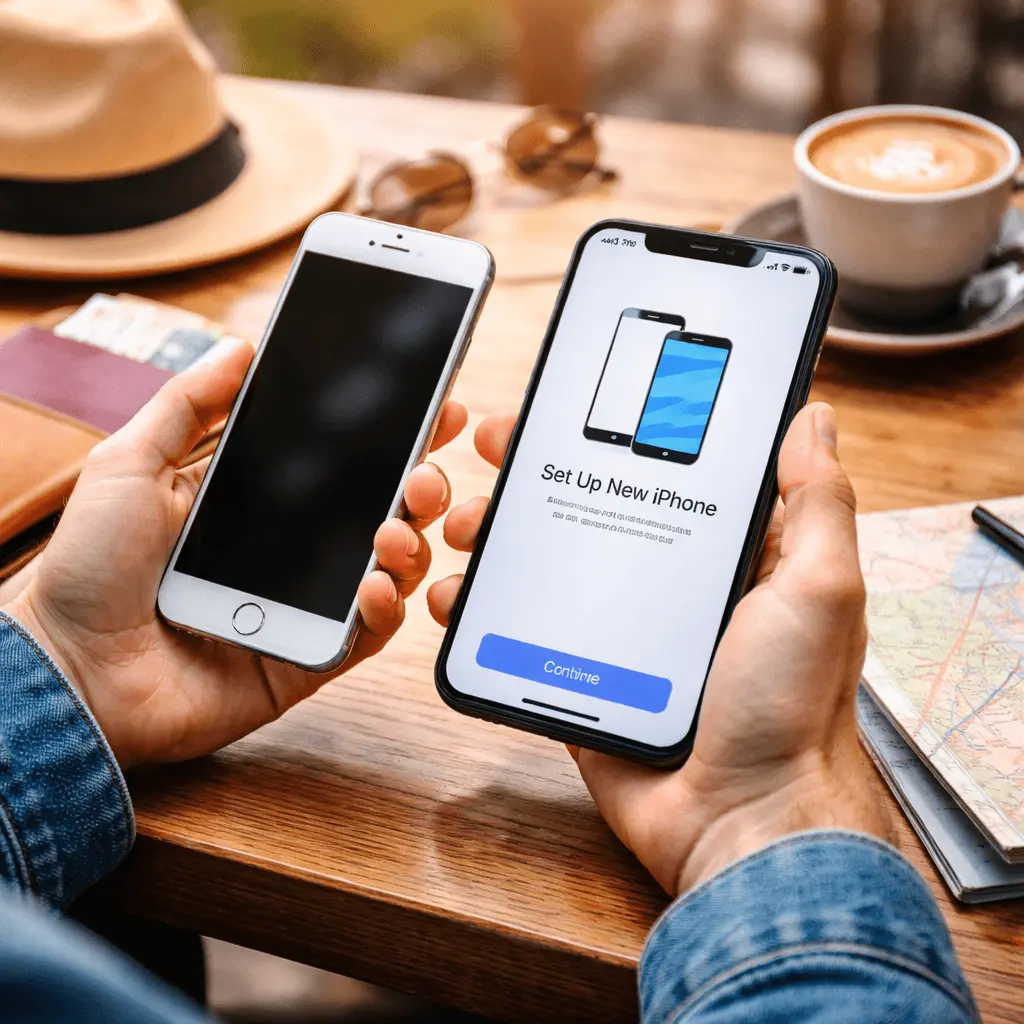
Changing anything about your phone setup usually sounds simple—until you’re in the middle of it. Maybe you upgraded to a new device. Maybe your old phone broke right before a trip. Maybe you’re swapping between a work phone and a personal phone. Or maybe you’re not changing the phone at all—you just need a different plan for a new destination, a longer trip, or a sudden change of itinerary.
That’s when the “SIM card era” starts to feel outdated.
An eSIM (embedded SIM) makes switching phones or changing mobile plans much easier because it removes the physical part of the process. No tiny plastic card, no SIM tray pin, no “where did I put my main SIM,” and no panic when you’re doing all this while traveling.
This post is about what eSIM changes in real life: faster setup, fewer mistakes, and less friction when plans (or devices) change.
Why switching used to be such a headache
Traditional SIM setups the same set of annoyances over and over:
You have to physically remove and a SIM card, which is easy to mess up when you’re rushed. You can lose the SIM. You can damage the tray. You can accidentally leave your home SIM in a hotel room. And if you’re traveling, you might need to find a shop to replace it—or you might lose access to your main number until you get home.
Plan changes can be just as annoying. If you’re using a local physical SIM and you run out of data, you might need to top up through an unfamiliar system, deal with language barriers, or buy another SIM entirely. If you’re moving between countries, you might end up repeating the whole process.
All of that adds stress to something that should be simple: “I want my phone to work.”
What eSIM changes, in plain terms
With eSIM, your mobile plan can be activated digitally. That means a lot of the friction disappears:
You can set up a plan without physically handling anything. You can add or switch plans more easily. And in many cases, you can get connected quickly without searching for a store or relying on public Wi-Fi for long.
The bigger advantage is this: eSIM supports flexibility. If you travel often, change destinations, or switch devices, flexibility becomes comfort.
Scenario 1: You upgraded your phone
New phone day is exciting, but it’s also when people realize how much their number and connectivity are tied to small details. If you’re using physical SIM cards, moving service usually means pulling the card out of the old phone and pushing it into the new one.
That’s fine… until it isn’t. Some phones have different tray types. Some people lose the SIM pin. Some people end up with their home SIM in the wrong device when they’re trying to keep work and personal lines separate. And if you’re using multiple SIMs for travel, things can get messy quickly.
With eSIM, you’re not relying on a physical chip to represent your plan. That makes the process of getting back online feel more controlled. When your plan is digital, switching becomes less about tiny hardware and more about a clear setup step.
Scenario 2: Your phone breaks while traveling
This is the scenario nobody plans for. Your phone gets stolen, drops into water, or simply dies. Suddenly you’re buying or borrowing a replacement device, and you need connectivity fast—maps, bookings, messages, account access.
With physical SIM travel setups, you might not even know where your SIM is at that moment. Or you might have been using a local SIM that you now can’t easily replace. You can end up stuck offline until you find a store or figure out local carrier rules.
With eSIM, the “getting connected” step can be simpler because you can activate a plan digitally on the device you have, rather than depending on finding the right physical SIM at the right time.
Even if the situation is stressful, the connection part doesn’t have to be.
Scenario 3: You’re switching plans because your trip changed
Trips change all the time. Maybe you added a second country. Maybe your stay got extended. Maybe you realized you need more data because you’re using maps, ride-hailing, and video calls every day.
In the physical SIM world, you might be locked into whatever you bought at the beginning, or you might have to deal with top-ups that are confusing, inconsistent, or not easy to do outside the country. Some travelers just give up and turn roaming on—then regret it later.
With eSIM, it’s easier to adjust your connectivity to match your reality. Instead of making your travel plans fit your SIM card, you can make your data plan fit your travel plans.
That’s a quiet kind of convenience, but it makes a real difference.
Scenario 4: You want to keep your main number and still use travel data
A lot of travelers want two things at the same time:
They want affordable travel data.
They also want to keep their main number active for calls, texts, and verification codes.
If your phone supports dual SIM, eSIM makes this setup straightforward: keep your primary SIM for your number, use an eSIM for travel data. You avoid the “swap out my home SIM and hope I don’t need it” problem, and you keep your accounts reachable.
This is especially useful for people who travel for work, use banking apps that require verification texts, or just want the peace of mind of staying reachable.
Fewer steps means fewer mistakes
Most travel tech problems aren’t complicated—they’re just a chain of small annoyances. Wi-Fi is slow, you can’t log in, you can’t receive a code, you can’t find the SIM tool, you don’t remember where you put the SIM, and suddenly you’re spending the first hour of your trip dealing with your phone.
eSIM reduces that chain.
When you remove physical SIM swaps from the equation, you remove a bunch of small failure points. Fewer steps means fewer opportunities for something to go wrong. And when you’re traveling, that matters more than you think.
The simple takeaway
Switching phones and switching plans are both normal parts of modern travel. The question is whether your connectivity setup makes those changes easy—or turns them into a hassle.
eSIM is built for change. It’s built for travelers who move between places, who adapt plans, who upgrade devices, and who don’t want their trip slowed down by a tiny piece of plastic.
If you’ve ever lost a SIM, struggled to find a shop, or wished you could just “get data now,” then eSIM is exactly the upgrade you’re looking for.
Ready to make switching easier?
Download our app to get set up in minutes and manage your connectivity wherever you go. And if you’re planning a trip soon, browse our eSIMs to find a data plan that fits your destination and travel style—so you can stay connected without the stress.