
eSIM for Remote Work: Travel Without the Connectivity Anxiety
Christian HahnkeTech Enthusiast
Published:
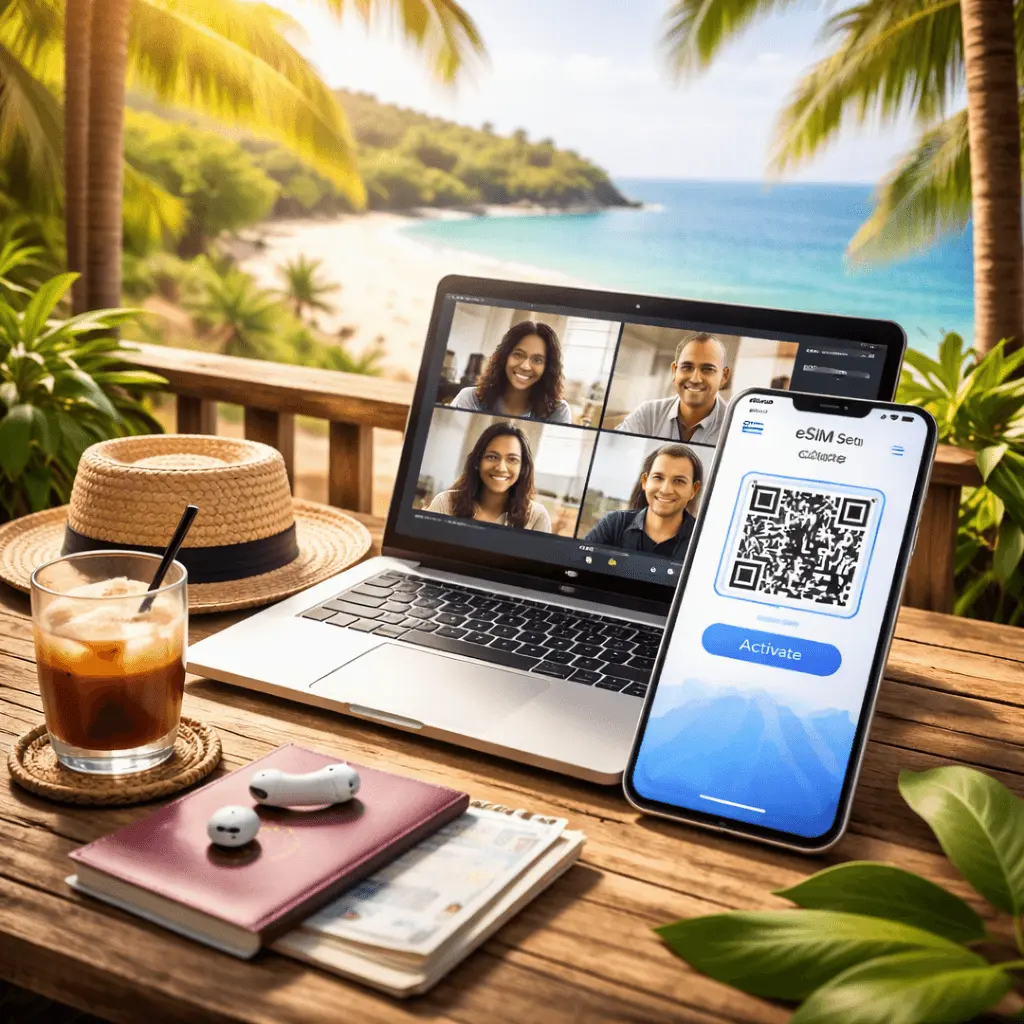
Remote work travel sounds like the dream: answering emails from a sunny café, taking calls from a cozy apartment in a new city, and exploring somewhere new after you close your laptop. But there’s one problem that can quietly turn the dream into stress: connectivity anxiety.
You know the feeling. The moment you land, you start thinking:
• Will my phone work right away?
• Will I be stuck on weak airport Wi-Fi?
• What if I need to join a meeting in 20 minutes?
• What if my bank sends a verification code and I can’t receive it?
When your work depends on being online, “I’ll figure it out when I arrive” isn’t a great strategy. That’s exactly why more remote workers and digital nomads are choosing eSIM—not because it’s fancy tech, but because it makes staying connected predictable, fast, and low-stress.
The Real Problem With Remote Work Travel
When you travel while working, the internet isn’t just for maps and messages. It’s your lifeline for:
• video calls and voice meetings
• file uploads and downloads
• messaging apps for teams and clients
• project tools and dashboards
• 2FA codes for email, banking, and work logins
Traditional solutions often friction:
• Roaming feels risky because of surprise costs.
• Local SIM cards mean wasting time at shops and swapping SIMs.
• Public Wi-Fi is unreliable and sometimes not secure enough for work.
• Pocket Wi-Fi devices add another gadget to charge, carry, and manage.
Remote work travel works best when connectivity becomes invisible—something you don’t have to think about every day. That’s where eSIM changes everything.
What eSIM Changes for Remote Work Travelers
An eSIM is a digital SIM built into many modern phones. Instead of inserting a plastic SIM card, you download a mobile plan directly to your device.
For remote work travel, this matters because it means:
• you can set up data before you fly
• you can arrive connected, not scrambling
• you can switch countries without buying new SIMs
• you can keep your main number reachable while using travel data
The Big Relief: Arrive Connected and Start Working Immediately
The first hours after arrival are often the most stressful. You’re tired, you’re navigating a new airport, and you may have work waiting.
With eSIM, you can activate your plan ahead of time so when you land, you can:
• open your ride app and reach your accommodation
• message your team that you arrived
• upload that file you promised
• join a meeting without relying on airport Wi-Fi
This is the difference between “I’ll get online later” and “I’m online now.”
Multi-Country Remote Work Travel Without Repeating the Same Hassle
Many remote workers don’t stay in one country. One month in Portugal, two weeks in Spain, a quick trip to Italy, then on to Greece. With physical SIMs, that becomes a repeating cycle:
• buy SIM
• swap SIM
• learn a new top-up system
• repeat
With eSIM, you can use regional plans or store multiple eSIM profiles and switch in your phone settings. That makes border crossings and short hops feel effortless.
Keep Your Home Number Reachable for Real Life Stuff
Even while you’re working abroad, home life doesn’t pause. You might need your main number for:
• bank alerts and purchase confirmations
• two-factor authentication codes
• messages from family
• calls from work contacts who already have your number
With many phones, you can keep your home SIM active (for calls and texts) while using eSIM for travel data. That means you don’t have to choose between affordable internet and staying reachable.
A Simple Remote Work Scenario
Picture this:
You’re flying into Bangkok on Sunday night. You have a client call Monday morning. You also need to log into your work email and approve a security prompt.
Without eSIM: you land, Wi-Fi is inconsistent, you can’t confirm a login, and you waste time trying to find a SIM kiosk. Stress climbs fast.
With eSIM: your phone connects as soon as you land. You message your client, confirm your work logins, and get to your accommodation with data working the whole time.
Remote work travel is supposed to feel flexible. eSIM helps make it actually feel that way.
The Bonus: Less Dependence on Public Wi-Fi
Public Wi-Fi is fine for casual browsing. For work? It’s often:
• slow
• unreliable
• limited by sign-up steps
• not ideal for sensitive logins
A travel data plan through eSIM gives you a dependable baseline connection, so you’re not forced to rely on whatever Wi-Fi happens to be available. It’s also helpful as a backup even when you’re staying somewhere with good internet—because hotel Wi-Fi can fail at the worst possible time.
Final Thoughts
Connectivity anxiety is real—especially when your job travels with you. eSIM doesn’t just give you data; it gives you predictability. You know you’ll land connected. You know you can move between countries without restarting the SIM process. You know your essential texts and verification codes can still reach you.
If you want remote work travel to feel calm instead of stressful, eSIM is one of the simplest upgrades you can make.